
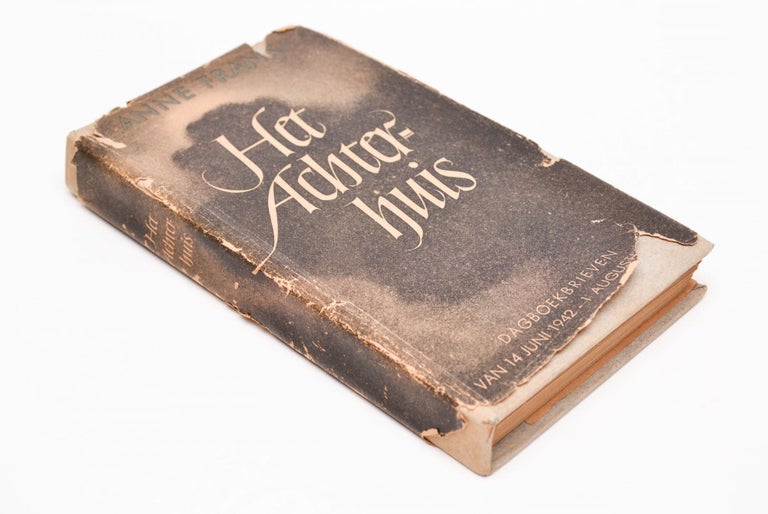
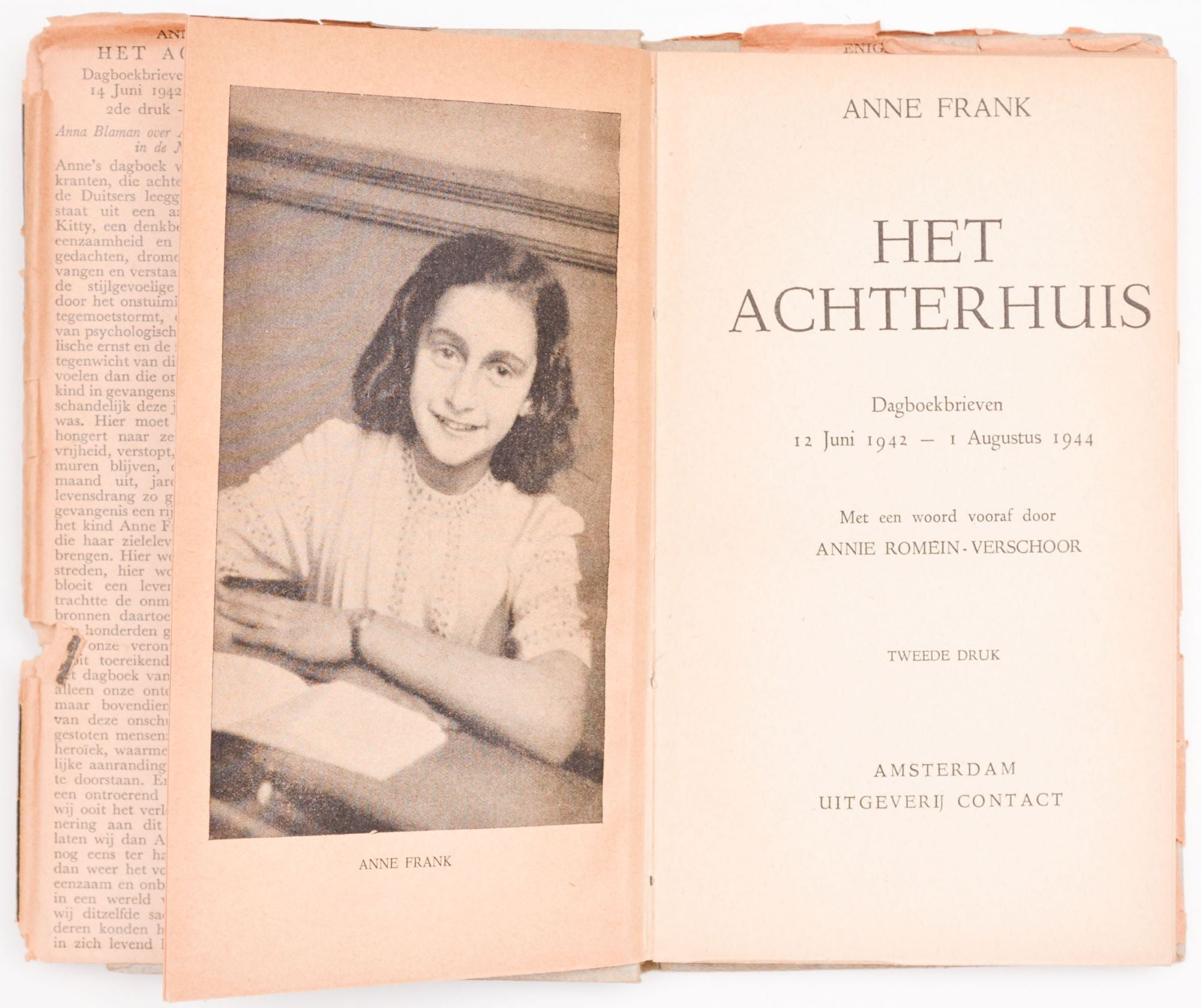
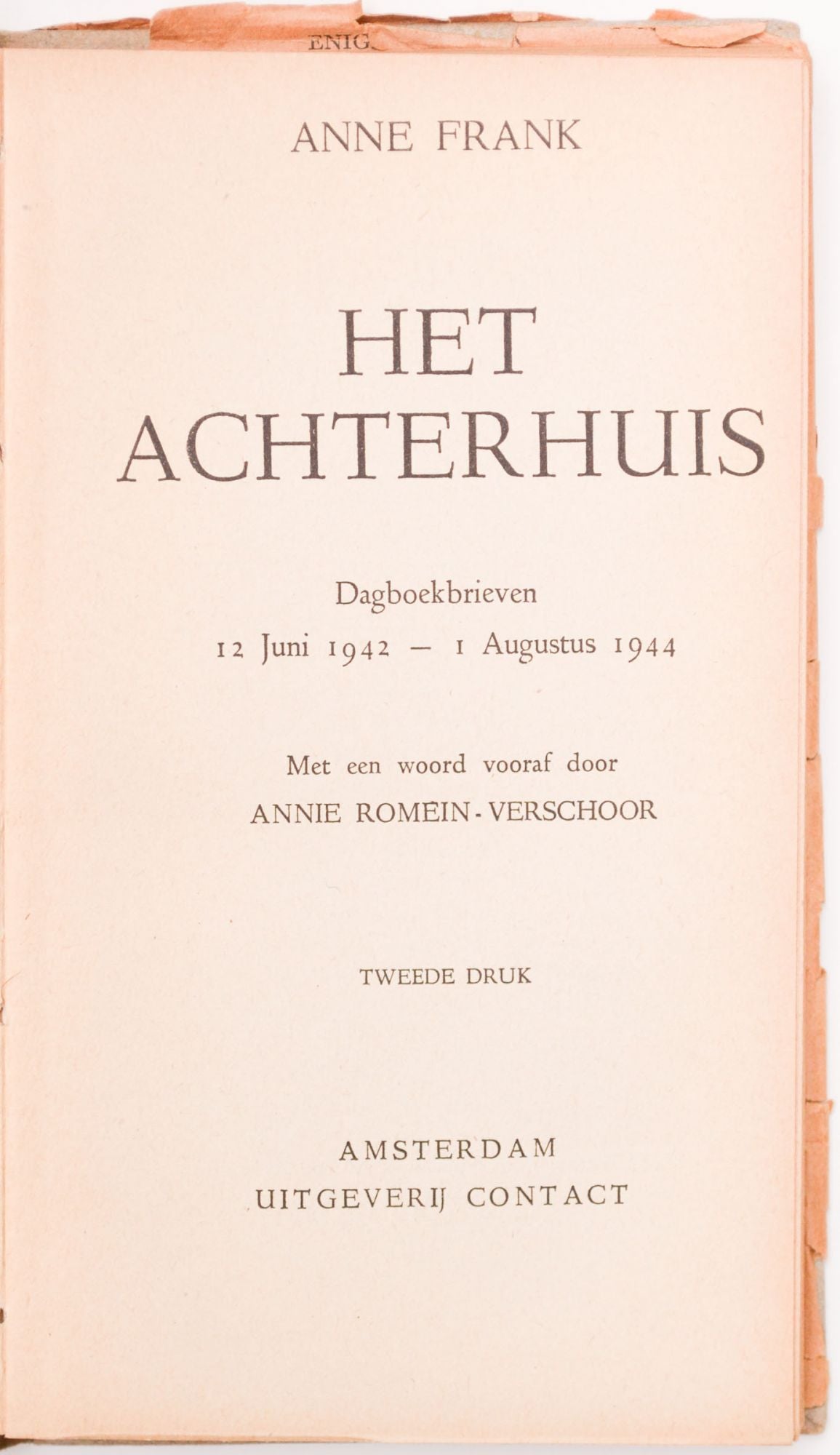
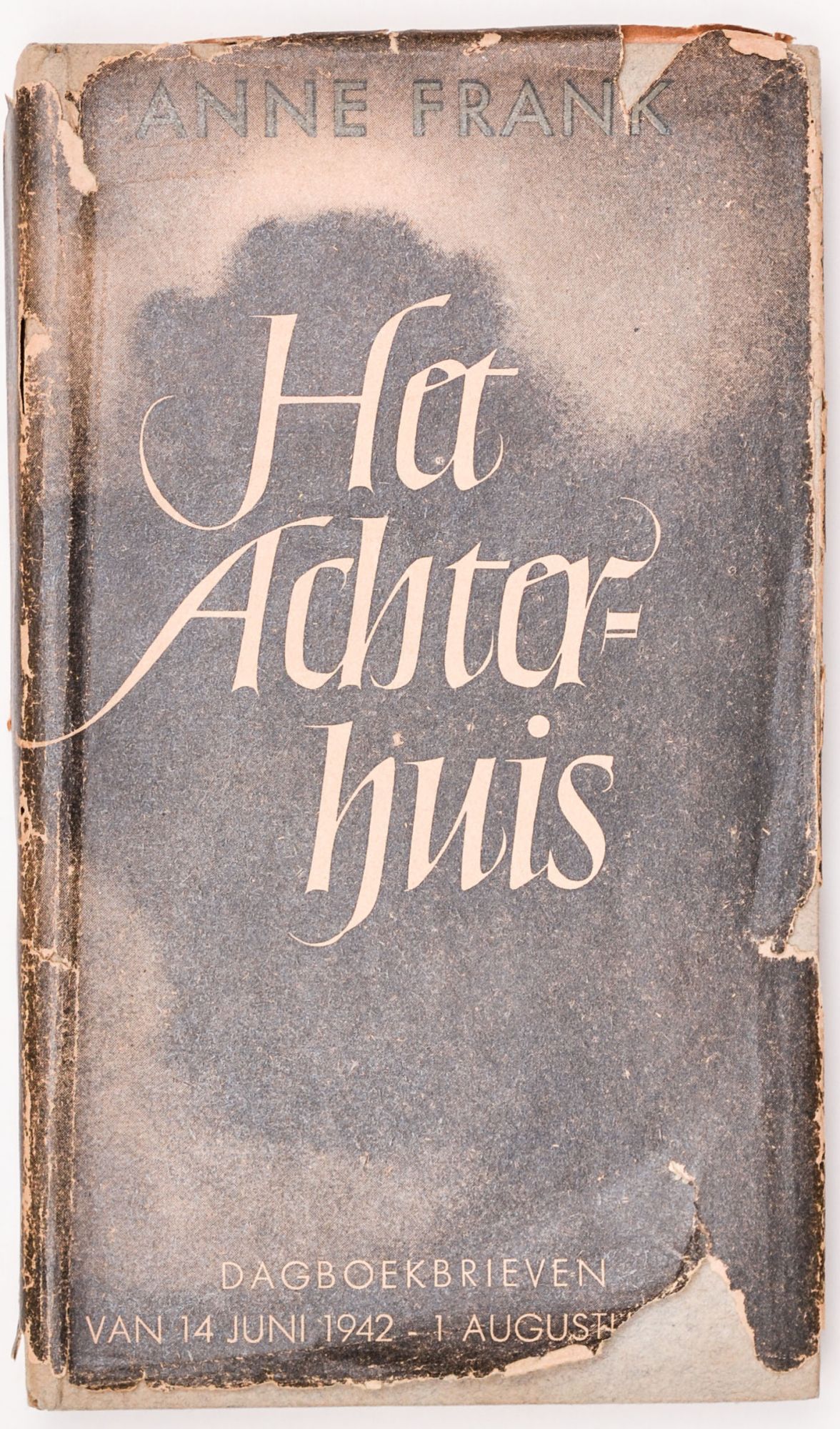
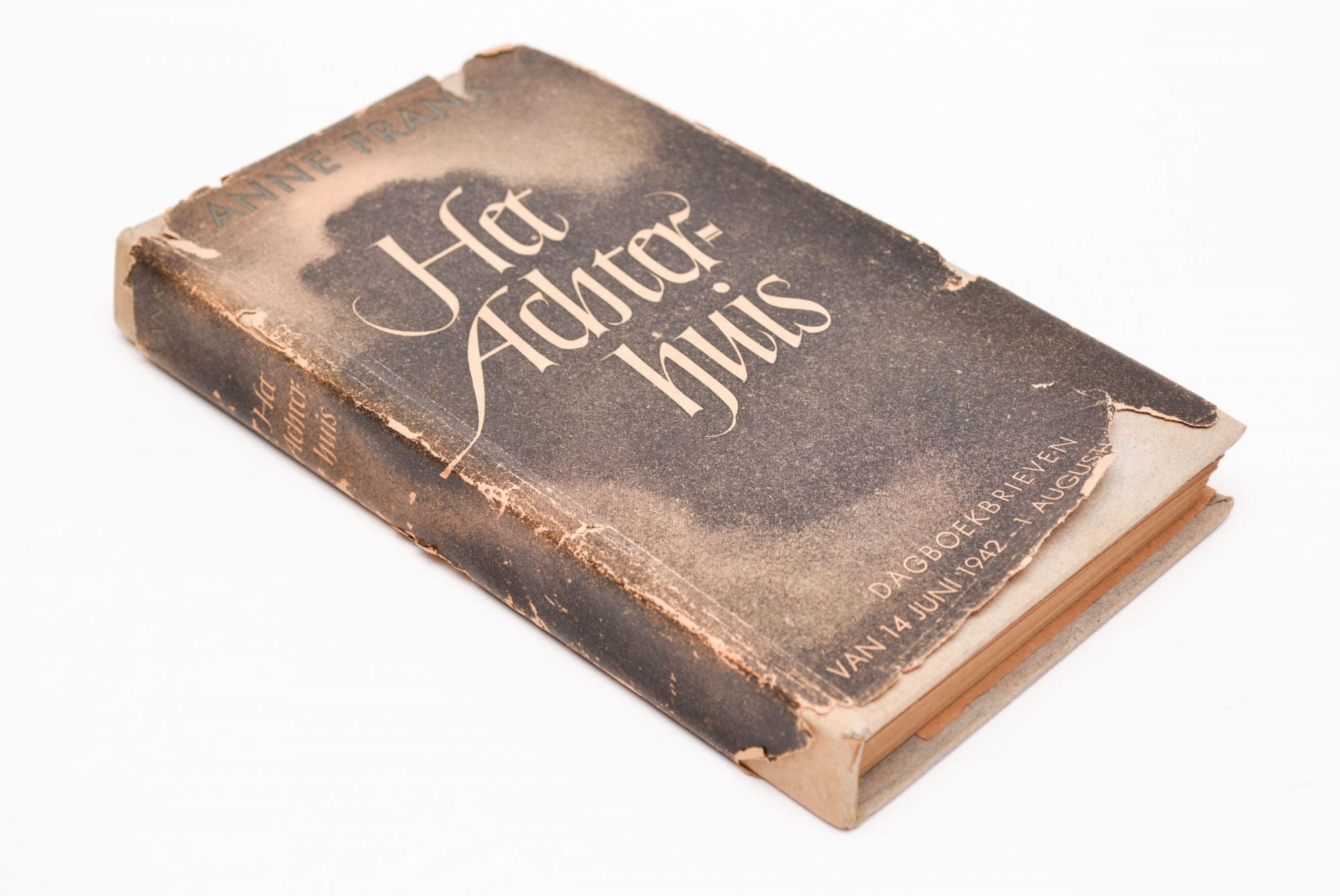
Het Achterhuis. Dagboekbrieven 12 Juni 1942 – 1 Augustus 1944. Met een woord vooraf door Annie Romein-Verschoor. Tweede Druk.
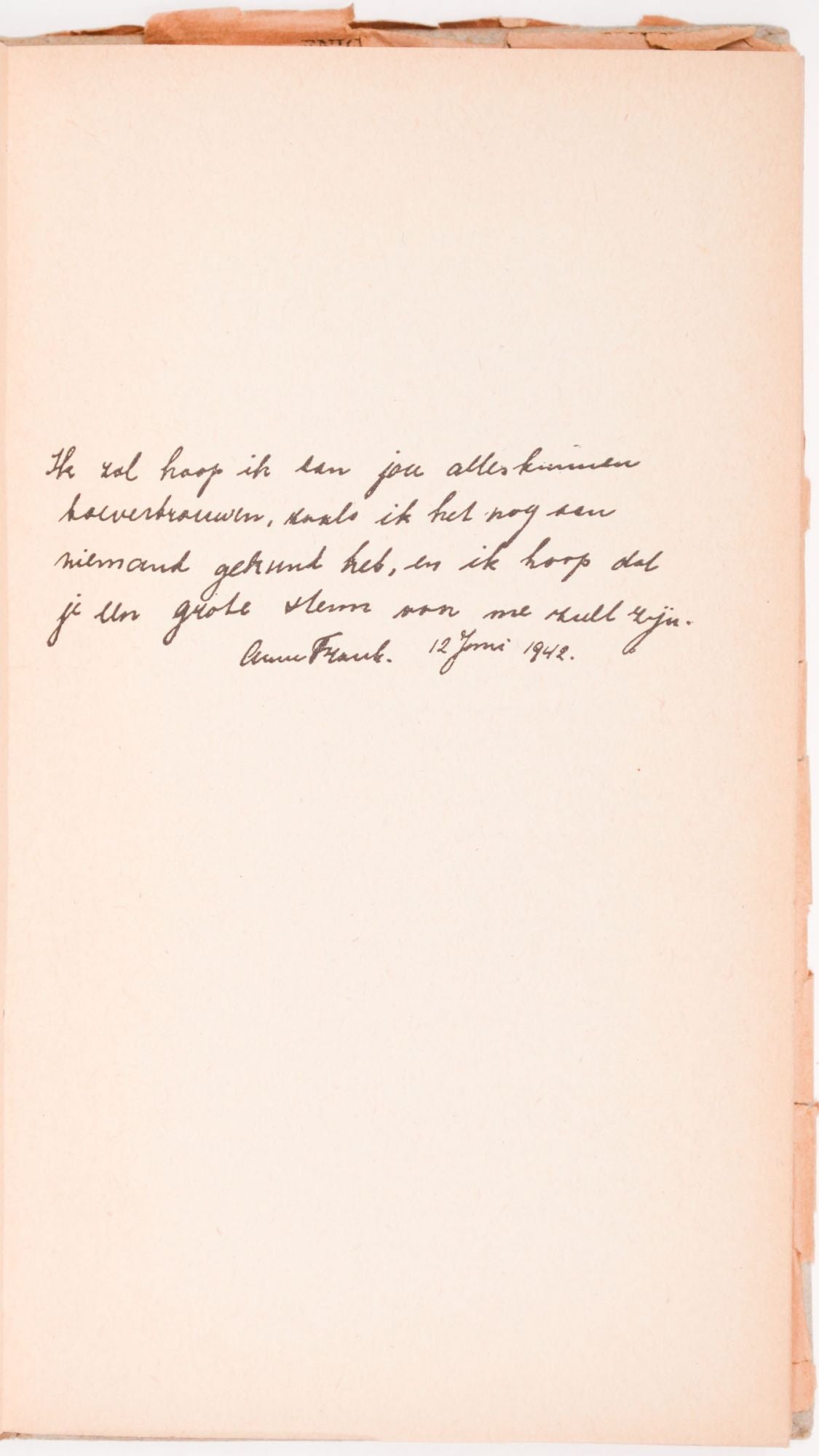
Amsterdam: Uitgeverij Contact, [December 1947]. First edition, second impression. In original cardboard, printed in orange. With the scarce, illustrated dust jacket. ix [1] 252 [2] p., (1) photographic frontispiece and (2) photographic plates. Panels slightly discolored due to aging. Booksellers stamp on inner front panel. Pages yellowed due to acidic paper. Overall in very good condition. / Dust jacket damaged at spine and folding with some losses; chipped at edges.
First edition second impression of Het Achterhuis (The Diary of Anne Frank). “One voice speaks for six million—the voice not of a sage or a poet but of an ordinary little girl,” wrote Ilya Ehrenburg of Anne Frank’s diary.
The diary is a central document of Holocaust memory and a first-person record of daily life, fear, and moral reflection written contemporaneously by a teenager. It preserves the uncertainty of events as they unfolded, without knowledge of their outcome. It is widely used in historical scholarship and education and has been translated into dozens of languages. It remains one of the most influential personal documents of the twentieth century, shaping public understanding of the Holocaust through an individual, non-retrospective voice.
Anne Frank was born in 1929 and received a diary for her thirteenth birthday, shortly before she and her family went into hiding in Nazi-occupied Amsterdam. She continued writing until 1 August 1944, three days before their arrest. In March 1944, after hearing a radio appeal by a Dutch government minister in exile urging citizens to preserve documents of the occupation, she began revising her diary with publication in mind, omitting some passages and expanding others. She intended to publish the work under the title Het Achterhuis (The Secret Annex).
The family was arrested on 4 August 1944 and deported to concentration camps. Anne was transferred from Auschwitz to Bergen-Belsen, where she died in early 1945. After the arrest, her writings were recovered and later edited for publication by her father, Otto Frank, the sole surviving member of the family. The diary was first published in the Netherlands on 25 June 1947 and soon became one of the most widely read personal accounts of the Holocaust.
.
Price: €10,000.00